.svg)


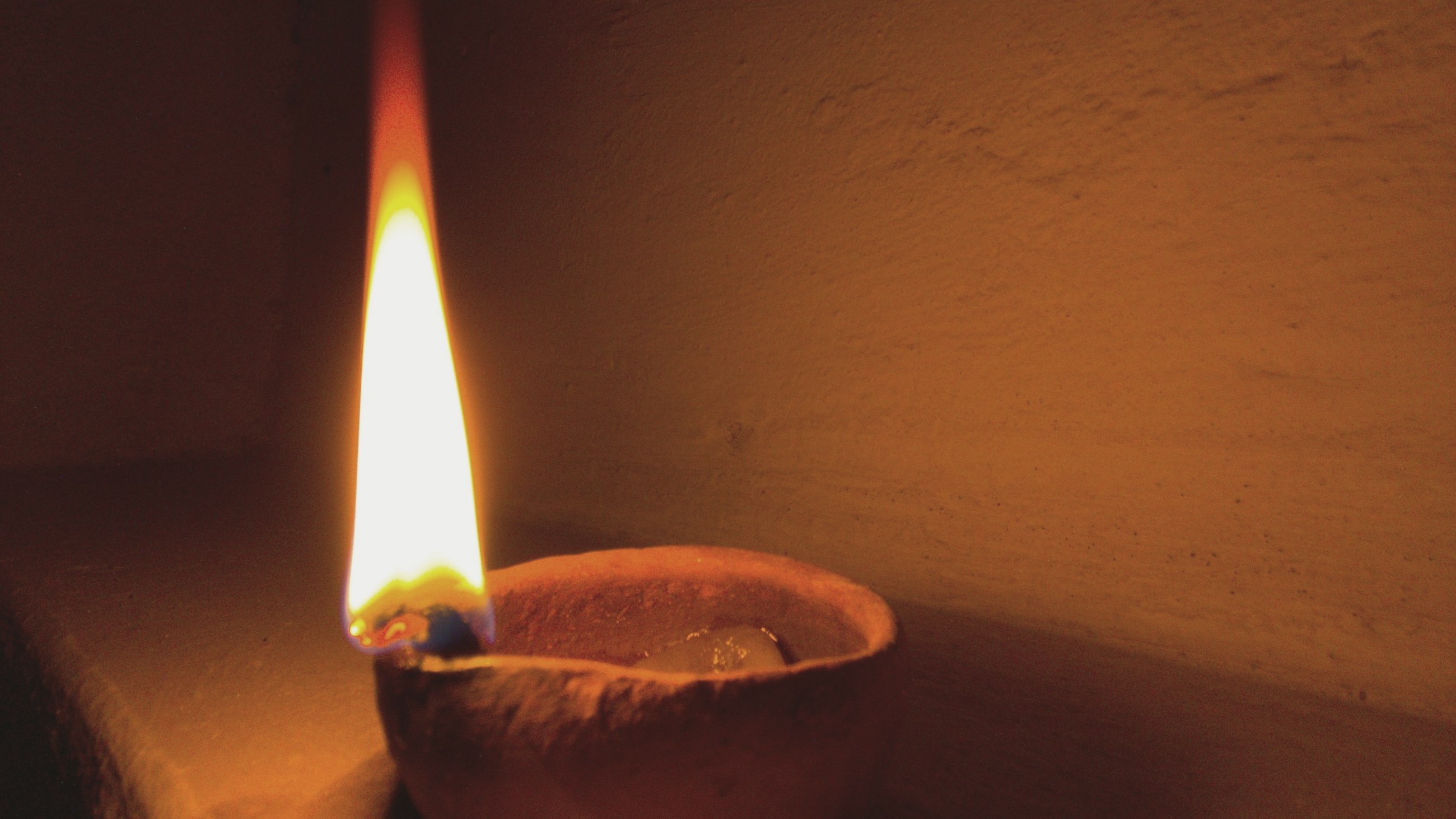
Something tightens in your chest before you understand why.
Someone at the table asks the ordinary question — about your job, your weight, when you're finally settling down — and your hands go still around the cup in front of you. You answer normally. You even smile. Nobody watching would guess that something old and already familiar has started moving through you, uninvited, before a single word left your mouth.
You are not imagining it, and you are not the only one who has felt it arrive that fast.
Nine hundred years ago, a scholar in the Persian city of Tus gave that feeling a name: anger. He listed it among dozens of what he called the diseases of the heart — things to observe and understand, the way a doctor observes a fever, not only sins to confess. And in 2024, researchers compared his list to the DSM-5-TR — the manual doctors use to diagnose mental health conditions. The two lists matched up.
Yes, and it has now been checked closely. In 2024, researchers ran a document analysis — reading al-Ghazali's account of the diseases of the spiritual heart, Volume III of the Iḥyāʾ, line by line — and compared it, category by category, against the DSM-5-TR (Subandi et al., 2024, Journal of Religion and Health). All six of his categories lined up with something the manual names:
Al-Ghazali was not working alone — he was giving structure to a category the tradition had already opened, the idea that a heart can carry sickness.
The diseases of the heart are the tradition's old name for what drives how a person acts — the pull under the behaviour. Nine hundred years before today's manual existed.
Six categories. Forty named conditions inside them. And the most frequent theme across the whole volume, by the authors' own count, is anger — 587 occurrences, ahead of arrogance, lust, lying, and envy. Nine hundred years later, the condition at the top of his list is the same one that found you at the table — before you had said a single word.
Two cautions belong here, and they are the reason this finding is worth anything. The correspondence connects across six categories, not condition by condition. No one has demonstrated that forty classical ailments match up perfectly with forty modern diagnoses. The authors conclude cautiously. Their own word is proneness: these conditions may make a disorder more likely. The paper never calls them a cause, and neither will we.
Yes, and the study on this is extensive. In 2024, a scoping review examined 132 scholarly works in Arabic, English, and Turkish. This study compared classical Islamic psychology with modern psychological science, instead of testing new ideas. Inside it, a separate strand of three studies compared Abu Zayd al-Balkhi’s symptom descriptions from the ninth century with DSM-5 criteria, and found similarities in obsessional disorders, phobias, and depression. (Elzamzamy et al., 2024, Journal of Muslim Mental Health).
A different scholar. A different century. A different research team — and still, the descriptions line up. One match could be luck. Two, in different languages, starts looking like a pattern.
Much of this literature is still championing the classical tradition, though serious investigations sit among it too. This research is young, not settled. It maps and describes what already exists.
While the tradition named a discipline, it did not name a treatment in the clinical sense. The classical answer is tazkiyat al-nafs (the purification of the soul). A 2026 study published in the journal Tasfiyah reads this concept as a structured framework for building mental resilience, and records that tazkiyat al-nafs was given systematic form in Imam al-Ghazali’s thought.
In Nuviel language:
Tazkiyat al-nafs is the inward work of clearing what clouds the heart so it can return to steadiness. A discipline — the kind you practise for years and never quite finish, which is also true of most of what actually changes a person.
The paper reads that work as three movements:
This is the paper's own analytical reading of al-Ghazali's teaching, not a claim that al-Ghazali laid the stages out this way himself. And it carries a line, translated from the Iḥyāʾ, that anyone who has tried to change a habit will recognise immediately: "you must constantly pull against them as they pull against you."
Al-Ghazali knew willpower alone wasn't enough against the passions, hence "you must constantly pull against them as they pull against you." In Nuviel's reading: not a single win, but a grip you don't let go of — because the other side never lets go either.
One boundary matters most here: this paper is theoretical, not empirical — it argues from texts and ideas, not from testing anything in a study.
Here's our reading, and we're marking it as ours.
Two traditions of careful observation, nine centuries and a continent apart, sat with real human suffering long enough to sort it into categories — and drew maps that overlap. Not because one came first. Because both were looking honestly at the same thing.
Two independent maps that agree do not prove anything on their own. What they give you is permission — permission to stop treating your faith and your body as if they're on opposite sides, when the people who studied each most seriously kept arriving at the same descriptions. What you carry has been named twice, in two languages, by people who never spoke to each other and had no reason to agree.
You don't have to choose which name to use. You were never actually being asked to.
The next time it arrives — the tightening at the table, the heat before you know why — try looking at it as something to notice.
Name it plainly: this is anger. This is envy. This is fear of what they will say. The word, not the story you usually wrap around it.
Notice where it has landed in your body before you decide what it says about you.
Then do nothing about it for the length of one breath. Not fixing it. Not arguing with it. Noticing is the whole task tonight.
If you work near this bridge as a clinician or a scholar, we'd welcome the conversation. You can reach us through the contact page.
Read next, if this raised more than it settled:
Reading about anger, or about a heart carrying disease, can land differently depending on what you're already carrying. If what surfaced here felt heavier than intellectual interest — a weight that doesn't lift when you close the tab, or a pattern that keeps repeating — please don't sit with it alone.
If you or someone you know is in immediate danger or is having thoughts of suicide or self-harm, please don't wait to reach out. Go to your nearest hospital emergency room, or call your local emergency number. In either case, contact a licensed mental health professional, a doctor, or a trusted person in your life as soon as you're able to.
This piece was written to bridge two ways of understanding the heart. It was never meant to replace the care of someone qualified to sit with you in it.
Elzamzamy, K., Bader, R. K., & Bircan, F. B. (2024). Contemporary scholarship on classical Islamic psychology: A scoping review. Journal of Muslim Mental Health, 18(1). https://doi.org/10.3998/jmmh.6025
Fanani, A. F., Efendi, R. S., & Muzammil, S. (2026). Tazkiyah al-Nafs in al-Ghazali's thought: A Sufi framework for enhancing mental resilience among Generation Z. Tasfiyah: Jurnal Pemikiran Islam, 10(1), 77–116. https://doi.org/10.21111/tasfiyah.v10i1.4
Subandi, M. A., Derin, S., & Setiyawati, D. (2024). Al-Ghazali's concept of diseases of the spiritual heart and its significance to the DSM-5-TR diagnosis. Journal of Religion and Health, 63(1), 490–514. https://doi.org/10.1007/s10943-023-01871-y
Yes — classical Islamic scholarship has a long history of naming and categorising conditions of the heart and mind as real. Al-Ghazali alone catalogued dozens of them nine centuries ago, and in 2024 researchers found his categories correspond to what the DSM-5-TR names as diagnostic criteria, features, or associated features.
What you are carrying has been taken seriously for a very long time. Longer, in fact, than the manual that has a name for it today.
The Qur'an's own vocabulary for the heart already suggests it was never meant to sit still. The word qalb comes from a root meaning to turn, to waver.
Al-Ghazali later built on that root, describing the heart as holding two dimensions: the physical organ, and a subtler, spiritual one that carries a person's real inner life.
No, and the research does not claim it. What researchers found is correspondence — two independent bodies of observation arriving at overlapping descriptions.
Who came first isn't the point, and claiming it would misrepresent the studies.
It is also worth knowing this research is young, not settled: much of the literature is still championing the classical tradition — the researchers' own word — though serious investigations sit among it too.
Tazkiyat al-nafs is the classical discipline of clearing what clouds the heart: inner work you practise for years rather than finish. A 2026 study reads it as a structured framework for building mental resilience, given systematic form in al-Ghazali's thought, and maps it in three movements. Takhallī is emptying, purifying oneself from spiritual diseases such as ostentation, self-admiration, envy, and excessive worldly attachment. Taḥallī is adorning, beautifying the soul with praiseworthy virtues such as patience, gratitude, detachment (zuhd), and humility. Tajallī is illumination, the state in which the purified and adorned soul reflects divine light — not an experience reserved for mystics, but the peak of complete existential awareness.
What the study does not do is test it. It argues from texts and ideas, with no trial behind it and no outcome measured.
So it is not a treatment for a diagnosis, and Nuviel will not dress it up as one. What it is: a discipline serious enough that researchers now map its structure — and something you can practise alongside clinical care.
The history here is less anxious about this than we are. Al-Ghazali did not merely permit discussion of the mind's conditions; he catalogued them, named dozens of them, and treated them as things to observe and work on, centuries before modern therapy existed.
Seeking help for what is happening inside you is not foreign to this tradition. It is native to it.
Where Nuviel is careful is the specific case — whether a particular treatment, a particular practitioner, a particular decision fits your life. That is scholarship applied to a situation, and it is why Nuviel works with scholars rather than around them.
Because it dissolves a false choice. Many Pakistani Muslims are handed a version of Western clinical psychology that requires leaving faith at the door, and a version of faith that ignores the body.
Two traditions, with no contact between them, still described the same suffering. The split was never in that pain — only in how it was explained to us.
Evidence sources: peer-reviewed research, classical and contemporary Islamic scholarship.
Nuviel offers educational content only — not therapy or medical advice. If you feel unsafe or at risk of self-harm, contact emergency services or a licensed professional immediately.